
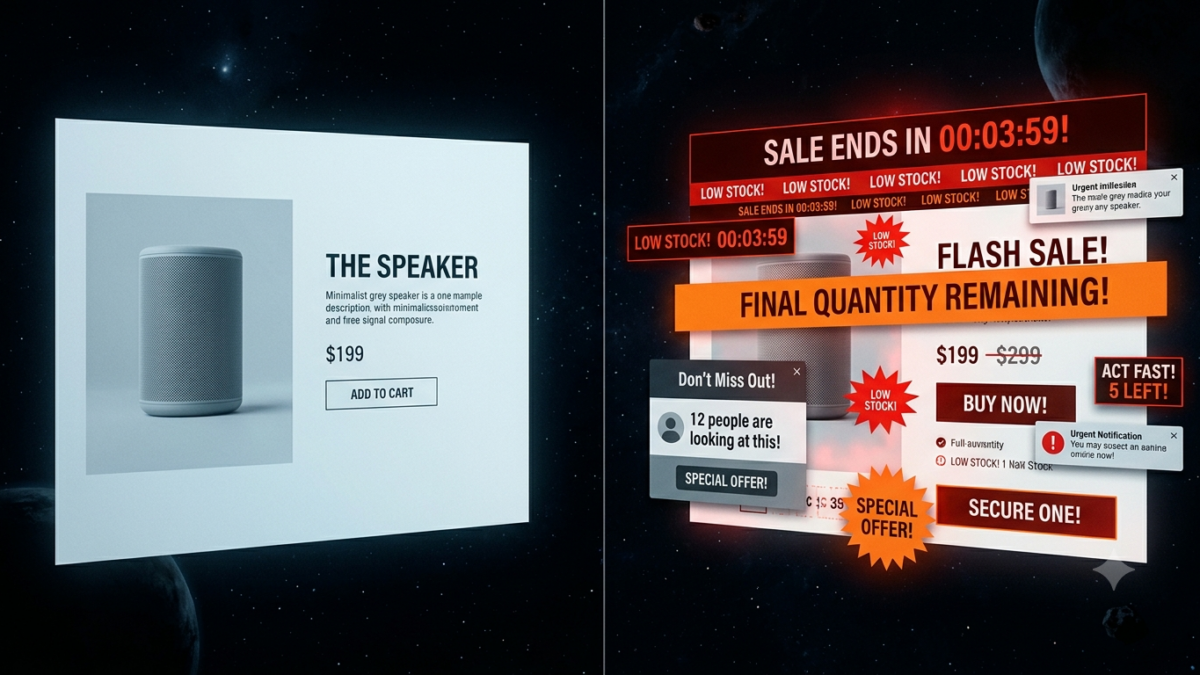
Open any major ecommerce platform and count how many things are trying to create urgency at the same time. A countdown timer. A “low stock” warning. A banner announcing a sale ending soon. A notification that someone else just bought the item you’re looking at.
None of this silence is accidental. It’s the absence platforms have specifically engineered against.
Silence gives you room to think — which is the actual threat
A quiet product page, with no timer, no scarcity warning, no artificial pressure, gives a shopper the mental space to genuinely consider whether they want something. That pause is exactly what conversion-optimised design is built to eliminate. Urgency isn’t there to inform you. It’s there to compress the gap between seeing something and buying it, before the natural moment of reconsideration has a chance to occur.
The manufactured emergency
Most “urgency” in ecommerce isn’t real. Countdown timers that reset when you revisit the page. “Only 3 left in stock” messages that persist for months. “12 people are viewing this” notifications generated by a script rather than actual concurrent viewers. These aren’t emergencies. They’re theatre — designed specifically to simulate the psychological conditions of scarcity, because genuine scarcity reliably produces faster purchase decisions.
What genuine urgency actually looks like, and how rare it is
Real urgency exists sometimes — a genuinely limited seasonal product, a real flash sale with a defined end time, actual low stock on a popular item. The problem isn’t that urgency exists. The problem is that it’s been manufactured so relentlessly and so falsely that shoppers have lost any reliable way to distinguish real scarcity from fabricated pressure. The tool has been used so much it’s stopped meaning anything — and the businesses using it dishonestly have degraded the value of honest urgency for everyone.
Why silence is actually a feature, not a gap to fill
A shopping platform confident in the quality of its own products doesn’t need artificial urgency to close a sale. It can let a product speak for itself, let the shopper take the time they need, and trust that a genuinely good match doesn’t require psychological pressure to convert. The absence of urgency isn’t a missed opportunity. It’s a sign of respect for the person making the decision.
The next time you notice a countdown timer, a stock warning, or a “someone else is looking at this” banner — pause for a second and ask whether it’s真实informing you of something, or whether it’s simply trying to stop you thinking. More often than platforms would like to admit, it’s the second one.
#EcommercePsychology #DarkPatterns #ConsumerAwareness #EthicalDesign #OnlineShopping #ShopWithMore #UXDesign